practice
12 Easy Yoga Poses for Kids (With Simple How-To)

12 easy yoga poses for kids with a plain how-to for each, plus age tips, safety and how often to practise. No equipment needed.
Your child has been glued to a tablet, and now they are wound up, grumpy and bouncing off the walls. You want something active and calm to offer instead, something that does not need a class, kit or a car journey.
Yoga is one of the easiest screen-free swaps you can make at home. No equipment, a few minutes, and poses that are basically animal impressions your child will happily copy.
Here are 12 easy yoga poses for kids, each with a plain how-to you can read aloud. We have flagged which suit toddlers and which suit older children, plus how to keep it safe and how often to do it. If yoga is completely new to your family, our beginner's guide to yoga for kids is a gentle place to start.
What are the best easy yoga poses for kids?
The best easy yoga poses for kids are simple, playful shapes named after animals and objects: cat, cow, cobra, downward dog, tree, butterfly, boat, lion, child's pose, mountain, star and bridge. They need no equipment, suit small bodies, and turn stretching into a game your child actually wants to join in with.
Read the steps out loud in a silly voice and let your child copy you. Do not worry about perfect form. With little ones, the animal noise matters more than the shape.
1. Cat
- Kneel on all fours, hands under shoulders.
- Breathe out and round your back up high, like a grumpy cat.
- Drop your head gently and say "meow".
2. Cow
- Stay on all fours from Cat pose.
- Breathe in, drop your tummy down and lift your chin.
- Look up softly and "moo". Rock between Cat and Cow a few times.
3. Cobra (snake)
- Lie on your tummy with hands flat under your shoulders.
- Press gently and lift your head and chest.
- Keep your hips on the floor and give a long "sssss".
4. Downward dog
- From all fours, tuck your toes and lift your bottom up high.
- Make an upside-down V shape with straight-ish legs.
- Look between your knees and give a little "woof".
5. Tree
- Stand tall on two feet.
- Rest one foot on your other ankle or calf (not the knee).
- Hold your arms up like branches and try not to wobble.
6. Butterfly
- Sit down and put the soles of your feet together.
- Hold your feet and let your knees flap gently like wings.
- Sit up tall and take a few slow breaths.
7. Boat
- Sit down and lean back slightly.
- Lift your feet off the floor and reach your arms forward.
- Balance on your bottom and row your boat.
8. Lion
- Kneel or sit tall.
- Breathe in through your nose.
- Open your mouth wide, stick your tongue out and "roar" as you breathe out.
9. Child's pose
- Kneel and sit back on your heels.
- Fold forward and rest your forehead on the floor.
- Let your arms rest by your sides and go quiet, like a sleeping mouse.
10. Mountain
- Stand tall with feet a little apart.
- Reach your arms up to the sky and stretch.
- Stand strong and still, like a big mountain.
11. Star
- Stand with your feet wide apart.
- Stretch your arms out to the sides.
- Make yourself as big as a bright star.
12. Bridge
- Lie on your back with knees bent and feet flat.
- Press your feet down and lift your hips up.
- Hold your bridge, then lower down slowly.
For more animal-themed ideas your child will remember, we have a whole post on five animal yoga poses for kids.
Which yoga poses suit which age?
Most of these poses suit any age from 3 to 11, but the way you offer them changes. Toddlers and pre-schoolers need play and imitation, not instruction, so make the noises and keep it silly. Children aged 5 and up can follow simple steps and hold a pose for a few slow breaths.
- Toddlers and pre-schoolers (under 5) - How to frame it: Copy-me play and animal noises, no "correct" form; Poses to start with: Cat, cow, lion, star, downward dog; Rough hold time: A few seconds, keep moving
- Ages 5 to 8 - How to frame it: Simple read-aloud steps, gentle challenge; Poses to start with: Tree, butterfly, cobra, boat, bridge; Rough hold time: 2 to 3 slow breaths
- Ages 9 to 11 - How to frame it: Short sequences they can lead themselves; Poses to start with: Any pose, linked into a flow; Rough hold time: 3 to 5 slow breaths
How do I keep my child safe during yoga?
Keep it safe by using a soft, non-slip surface, having your child take their socks off for grip, and never forcing or bouncing into a stretch. A pose should feel like a nice pull, never pain. Stop if anything hurts, stay close to supervise, and let your child come out of a pose whenever they want.
Younger children especially need you within arm's reach for balancing poses like Tree and Star.
If your child has a health condition, a recent injury, or any concern about their joints, breathing or development, have a quick word with your GP or health visitor before starting. Yoga is gentle, but it is always worth checking first.
How long and how often should kids do yoga?
There is no set amount, so little and often works best. Even five or ten minutes counts. The NHS says children and young people aged 5 to 18 should get an average of at least 60 minutes of activity a day, including things that strengthen muscles and bones, and yoga is a low-cost way to add to that total.
For under-5s, the NHS suggests at least 180 minutes (3 hours) of activity spread across the day, and lively animal poses like Downward Dog and Star count as active play.
You do not need a special time slot. A couple of poses after school, or a wind-down set before bed, adds up quickly.
Can yoga help my child wind down or feel calmer?
Yes, gentle yoga and slow breathing can help children relax and wind down, though it is a calming tool rather than a treatment. The NHS recommends a calm, consistent wind-down routine with screens switched off well before bed, and a few quiet stretches like Child's Pose fit that advice nicely.
Slow breathing in poses like Lion or Butterfly gives an anxious or over-tired child something soothing to focus on. The charity YoungMinds describes practising calming strategies together as one way to support a worried child, and it runs a free Parents Helpline on 0808 802 5544 if you would like to talk to someone.
Yoga is also a useful screen-time antidote. Ofcom's research shows UK children spend a large part of each day online. The UK's Chief Medical Officers steer parents away from chasing a single "safe" screen limit, and towards protecting sleep, movement and family time instead. An offline option like yoga is an easy thing to put back in. If screens are your real worry, our guide on how much screen time is right for kids walks through it calmly.
Frequently asked questions
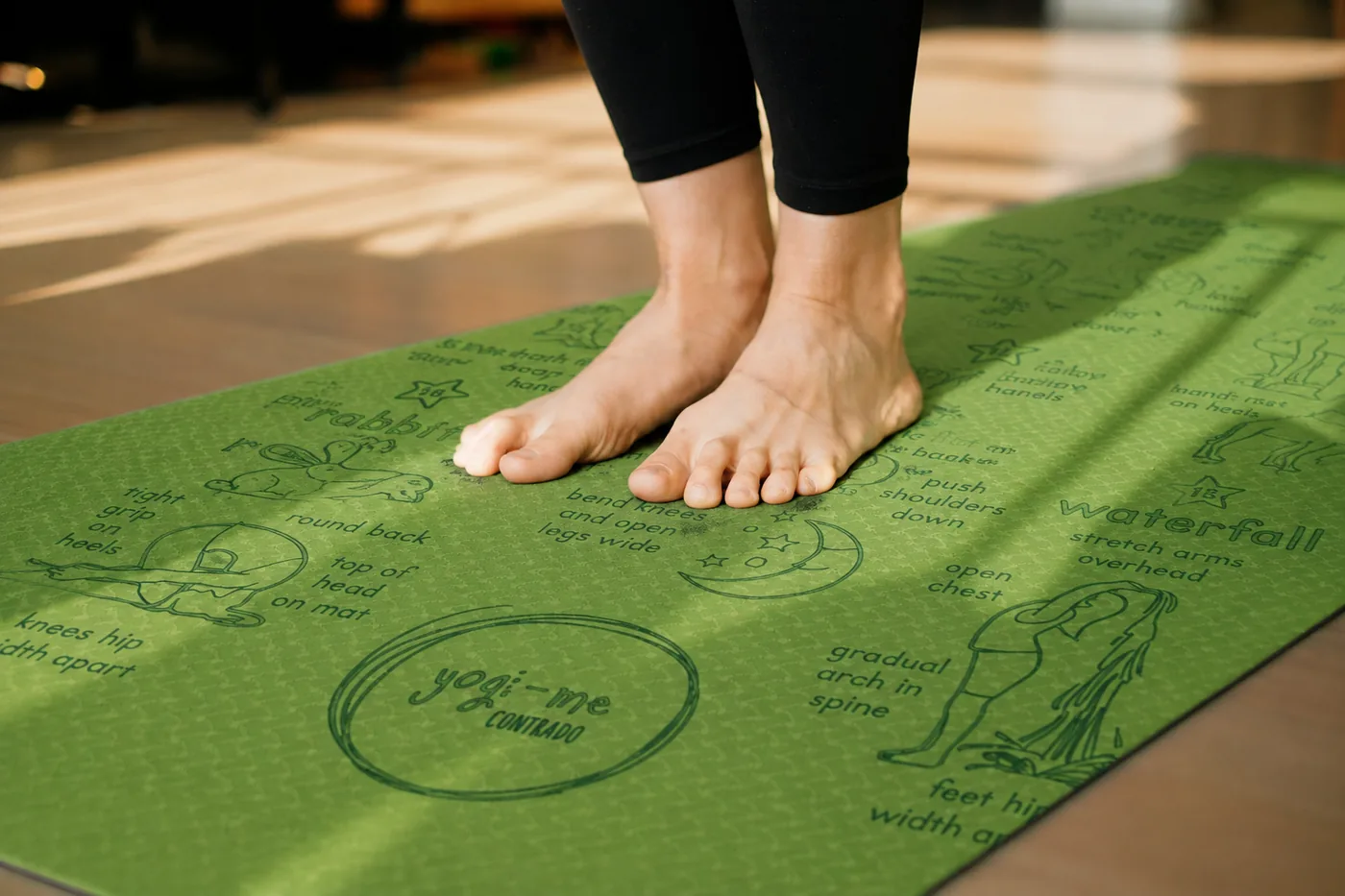
Do I need a yoga mat for kids' yoga? No, a carpet or rug works to start. But a soft, non-slip mat gives better grip and marks out "your child's space", which helps them settle and take it seriously. A mat with poses marked into it, like our Yogi-Me kids' yoga mat, also prompts the next move so you are not reading instructions.
What age can a child start yoga? From toddlerhood, around age 3, as long as it is playful copy-me movement rather than formal instruction. Keep it short and silly for under-5s. By 5 or 6, most children can follow simple steps and hold a pose for a few breaths.
Is kids' yoga different from adult yoga? Yes. Kids' yoga uses shorter holds, playful animal and object names, and no pressure to get the "correct" shape. The goal is movement and fun, not precision, so let your child wobble, giggle and adapt poses however they like.
How do I get a wriggly toddler to join in? Do not ask them to "do yoga". Just start being a cat or a lion yourself and wait for them to copy. Add big noises, keep each pose to a few seconds, and stop while it is still fun.
Can yoga help an anxious child? It can be a helpful calming tool. Slow breathing and gentle stretches give a worried child something soothing to focus on, but yoga is not a treatment for anxiety. If your child's worries are limiting daily life, speak to your GP or contact YoungMinds for support.
Try it screen-free today
Pick two or three poses from the list and have a go together this afternoon. If your child loves it and you want the moves in one easy-to-follow place, our kids' yoga mats have the animal poses marked into them, so little ones can lead their own practice.
Have a browse of the full Yogi-Me range in our shop and find the mat that gets your child moving, breathing and off the screen.
Sources
- NHS - Physical activity guidelines for children and young people
- NHS - Physical activity guidelines for children (under 5 years)
- NHS - Sleep and young children
- World Health Organization - Guidelines on physical activity, sedentary behaviour and sleep for children under 5 years of age
- GOV.UK - UK Chief Medical Officers' commentary on screen time and social media
- Ofcom - Children and parents: media use and attitudes report 2025
- YoungMinds - Supporting a child with anxiety