practice
Family Yoga: Fun (and Calm) for the Whole House
Family yoga your whole house can do together: a screen-free, calming way to move, wind down for bed, and hit daily activity targets. No kit needed.
It is five o'clock, everyone is tired and a bit fractious, and the tablet feels like the only thing that will buy you ten minutes of peace.
There is another option, and it does not need special kit or a bendy body. A few minutes of yoga together on the floor can burn off the wriggles, settle the mood, and pull the whole family off screens at once.
Here is how family yoga works when you have a house full of different ages, and how to start tonight without it turning into a battle.
Does family yoga actually count as exercise?
Yes. Gentle, playful yoga counts towards your child's daily movement. The NHS says under-5s should be active for at least 180 minutes a day, spread across light and energetic play, and ages 5 to 18 should average 60 minutes a day. Yoga adds variety and breaks up sitting.
It is not meant to replace running around outside. Think of it as one more way to hit those daily targets, and a useful one for the times when you are stuck indoors.
Reaching up like a tree, crouching like a frog, and balancing on one leg all build strength, balance, and body awareness. For little ones especially, holding a wobble is real work.
If you want the very basics first, our beginner's guide to yoga for kids walks through the simplest poses to try.
Will family yoga calm my child (and the house)?
Often, yes. The calm comes from the breathing, not the stretching. YoungMinds notes that slow breathing, breathing out for a count or two longer than you breathe in, helps a child's body relax, and that noticing what you can see, hear, and touch can ease worry. A shared wind-down does the same for tired parents.
Try this at bedtime. Two or three slow poses, then sit together and take five long breaths, making each out-breath a little longer than the in-breath.
The Sleep Charity recommends a calming wind-down in the hour before bed, and says there is evidence that mindfulness can help promote relaxation and sleep. Gentle yoga fits neatly into that pre-bed slot.
It will not fix a full-blown meltdown every time, and it is a wellbeing habit rather than a treatment. But as a nightly ritual, it gives everyone a shared way to slow down.
Is family yoga a good screen-free alternative to devices?
It is one of the easiest screen-free swaps you can make, because you can do it anywhere with no setup. The government's screen time guidance for parents of under-5s encourages safe screen swaps and shared family activities, such as playing a game together or being active, rather than fitting family life around screens. Yoga is exactly that kind of shared activity.
None of this is about screen-time guilt. The WHO suggests under-2s avoid screens and 2 to 4 year olds have no more than an hour a day, with more interactive, non-screen time instead. A short yoga session is a friendly way to fill some of that time.
The NHS suggests keeping screens away in the 30 to 60 minutes before bed, because the light from them can interfere with sleep, and building a calm, predictable bedtime routine instead. A few bedtime poses give that last screen-free stretch something to be about. For more on this, see our guide to screen-free habits that actually stick.
Can the whole family really do yoga together at different ages?
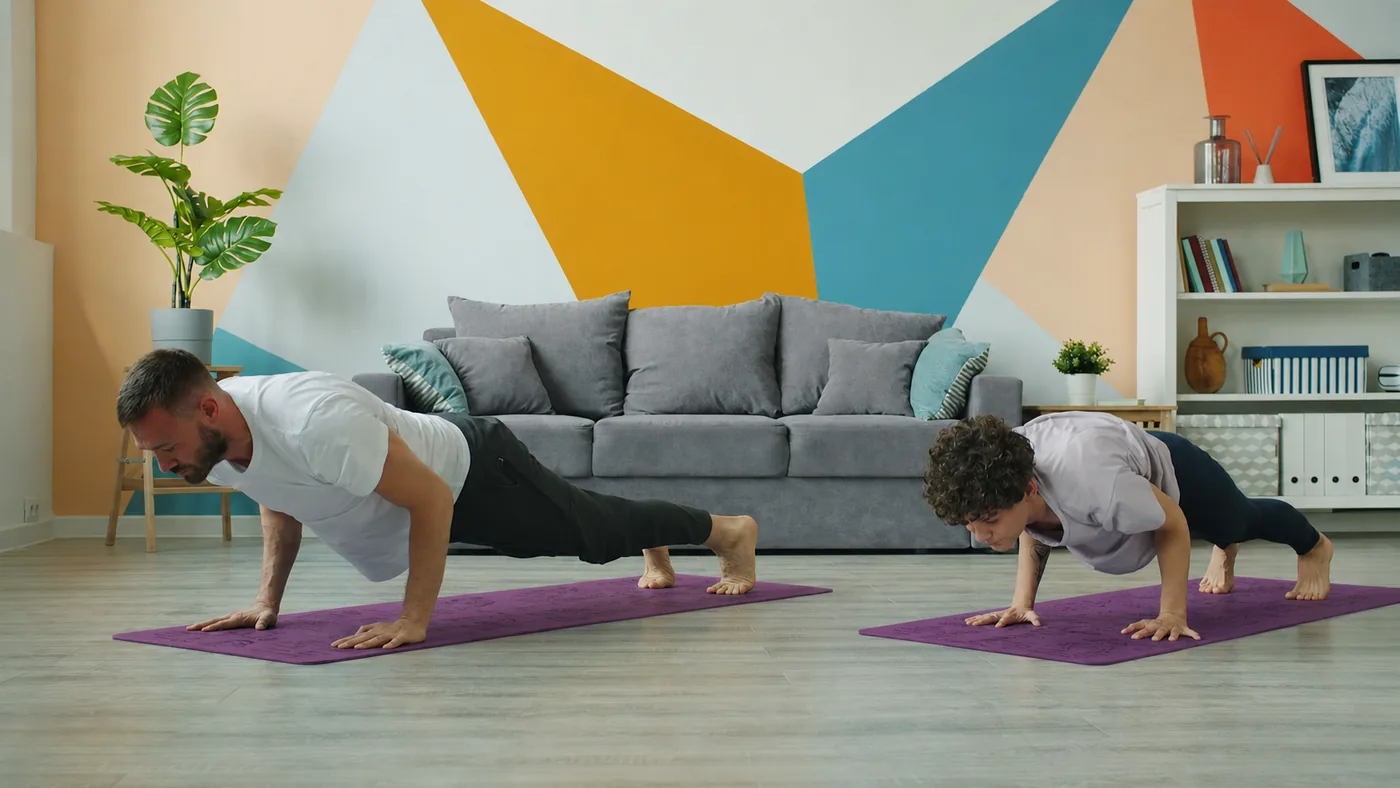
Yes, because yoga scales to whoever is in the room. Toddlers copy animal poses for a few silly seconds, older children hold and balance for longer and try trickier shapes, and adults get a genuine stretch out of the same poses. Nobody needs to be flexible or experienced to join in.
The trick is to run one pose at everyone's own level rather than expecting matching results. A three-year-old's "tree" is a wobble with both arms flapping. A grown-up's tree is a proper balance. Both are correct.
Here is roughly how one session looks across the family.
- Toddler (3 to 4) - What they do: Copies animal poses for a few seconds, lots of giggling; What they get from it: Movement, coordination, joining in
- Younger child (5 to 7) - What they do: Holds poses, tries balances, follows a short sequence; What they get from it: Strength, balance, focus
- Older child (8 plus) - What they do: Longer holds, links poses together, leads the breathing; What they get from it: Body awareness, calm, confidence
- Parent or carer - What they do: Does the same poses at full range, models calm breathing; What they get from it: A real stretch, shared time, less stress
Letting an older child lead a pose or count the breaths keeps them interested, and toddlers love copying an older sibling far more than copying you.
Two-person poses are great for mixed ages too. Our post on partner yoga poses for two has gentle ideas you can adapt for a parent and child.
How do we start family yoga safely at home?
Keep it short, playful, and led by your child. Clear a soft space, pick three or four animal poses, and stop while everyone is still enjoying it. Never push a child into a shape or hold it too long. The aim is fun and a habit, not a performance or a workout.
A few practical pointers make it smoother:
- Start with five minutes, not thirty. You can always do more tomorrow.
- Follow the child's lead. If they want to be a roaring lion twice, be a lion twice.
- Use a soft, non-slip surface so nobody skids on hard flooring.
- Do it at the same time each day, like after tea or before a bath, so it becomes routine.
- Breathe out loud together at the end. That is where the calm lands.
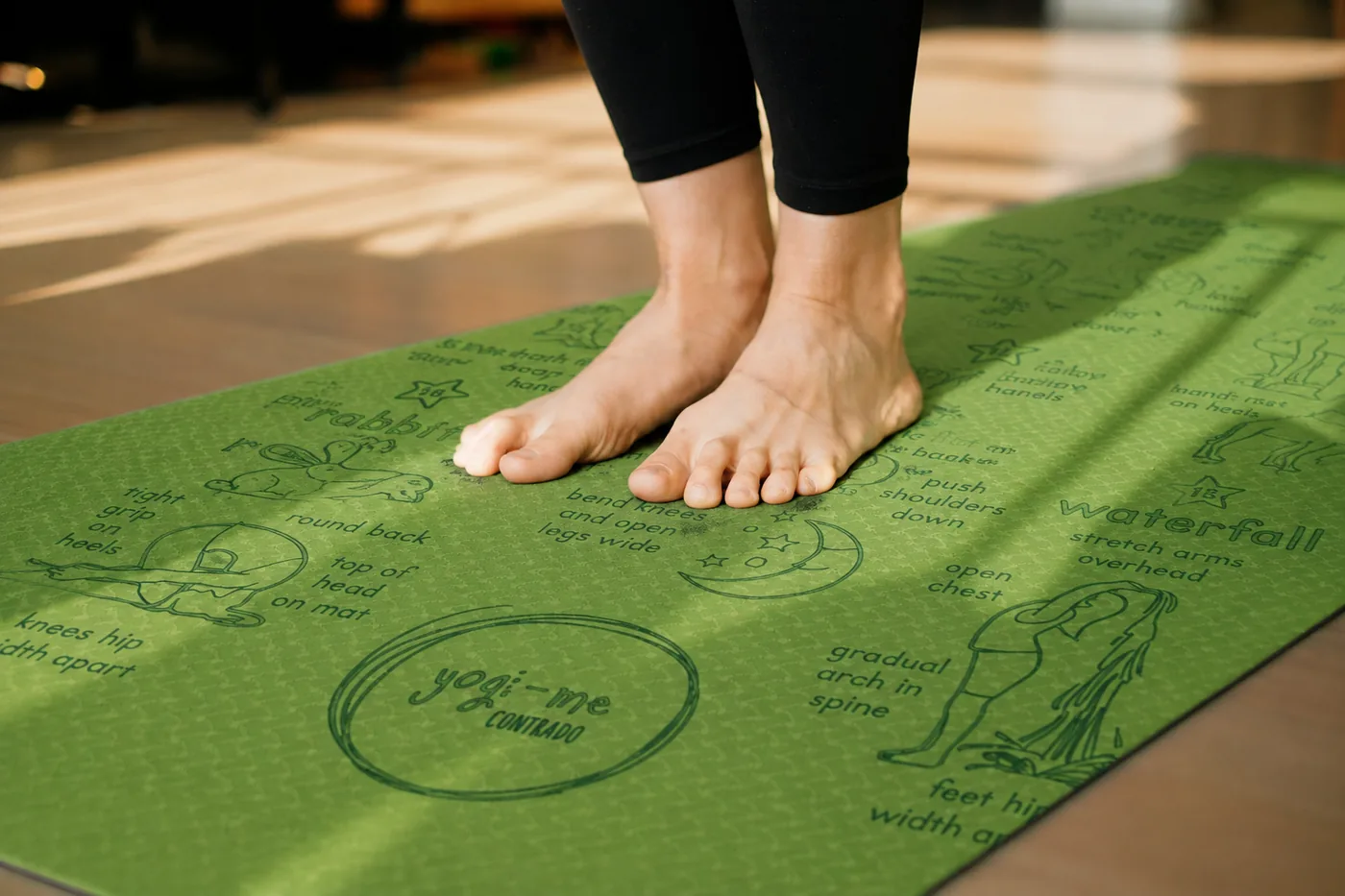
A proper kids' yoga mat helps here. Look for one that is non-slip, the right size for a small child, and easy to wipe clean. Ours print 15 numbered poses straight onto the mat, so your child has a picture to copy and the session more or less runs itself.
Frequently asked questions
What age can children start family yoga? As soon as they can toddle about and copy you, which is usually around age two or three. Younger babies enjoy floor play and tummy time instead. Keep sessions to a few minutes and let it be playful.
Do I need to be good at yoga to do this with my kids? Not at all. You do not need to be flexible, experienced, or able to touch your toes. Family yoga is about copying simple animal shapes and breathing slowly together, and your child will not be grading your form.
How long should a family yoga session be? Start with about five minutes and stop while everyone is still enjoying it. Little ones lose focus quickly, so short and frequent beats long and forced. You can stretch to 10 or 15 minutes as it becomes a habit.
When is the best time of day for family yoga? Whenever suits your household, though many families find it works best in the pre-bed wind-down. The Sleep Charity suggests a calming routine before bed, and a few slow poses with long breaths fit that slot well. After-school is good for burning off wriggles.
Can family yoga help my child sleep? It can help set the scene for sleep. The Sleep Charity links calming wind-down routines and mindfulness with relaxation and sleep, and gentle bedtime yoga with slow breathing is one way to do that. It is a helpful habit rather than a guaranteed fix.
Bring calm home tonight
You do not need to be bendy, and you do not need to spend a fortune. You just need a soft spot on the floor and five minutes together. If you would like a little help getting started, our kids' yoga mats print 15 numbered poses your child can copy, so the whole family has somewhere fun and screen-free to unroll and begin.
Sources
- NHS - Physical activity guidelines for children (under 5 years)
- NHS - Physical activity guidelines for children and young people (5 to 18 years)
- GOV.UK - Physical activity guidelines: UK Chief Medical Officers' report
- WHO - To grow up healthy, children need to sit less and play more
- GOV.UK - New screen time guidance for parents of under-5s
- NHS - Sleep and young children
- The Sleep Charity - Relaxation tips for children
- YoungMinds - Supporting a child with anxiety