guides
30 Screen-Free Activities for 3 to 8 Year-Olds

30 low-prep, screen-free activities for 3 to 8 year-olds, sorted by age and mood, that meet NHS active-play guidance without a screen in sight.
It's 4pm, the tablet has been on for an hour, and you need something else for your child to do that doesn't involve a screen or a full parental production.
You don't need a Pinterest board or a craft cupboard. You need a short, honest list of things that actually hold a child's attention.
Here are 30, sorted by age and by the mood you're in, most using stuff you already own.
Why do children need screen-free time every day?
Children need daily active, hands-on time because that's how they build their bodies and brains. The NHS advises under-5s get at least 180 minutes (3 hours) of activity spread across the day, and 5 to 18s average 60 minutes a day. Screen-free play is simply how much of that happens.
This isn't about banning screens. NHS guidance suggests fitting screen time around the things that matter most, like sleep, activity and family time, rather than the other way round.
Other NHS advice takes a similar line: the concern is when screens crowd out play, movement and sleep, not the odd episode. So aim for balance, not guilt.
If you want the habit to hold, our guide to screen-free habits that stick has the practical routine side.
What are the best screen-free activities for 3 to 4 year-olds?
For 3 to 4 year-olds, the best activities are big, simple and physical: running, climbing, jumping, drawing and building. The NHS describes running, climbing, jumping and drawing as the very skills children are developing at this age, so this messy, active play is literally how a pre-schooler is meant to grow.
Little ones tire of anything quickly, so keep options short and rotate them.
- Animal yoga. Roar as a lion, hiss as a snake, balance as a flamingo. It burns energy and needs no instructions from you.
- Sticker sorting. A sheet of stickers and a blank page will happily absorb ages.
- Cushion stepping stones. Sofa cushions on the floor, "the carpet is lava".
- Posting box. Cut a slot in a shoebox and let them post lids, cards or pegs.
- Kitchen band. Wooden spoon, saucepan, done.
- Water painting. A cup of water and a brush "painting" the patio or fence.
- Colour hunt. "Find me three red things." Repeat around the house.
- Playdough. Shop-bought or homemade, both hold attention.
What can 5 to 6 year-olds do without a screen?
Five and six year-olds can handle simple rules, turn-taking and a bit of a challenge, so games with a small goal work well. They can also play more independently, giving you a stretch of hands-off time while they build, draw or invent something of their own.
- Junk-model building. A box of clean recycling plus tape becomes a rocket or robot.
- Card games. Snap, Go Fish and pairs teach turn-taking.
- Obstacle course. Chairs, cushions and a skipping rope in the garden or hallway.
- Story dice or story stones. Roll, then make up the tale together.
- Nature scavenger hunt. A list of leaves, a feather, something round.
- Dressing-up box. Old clothes and a mirror keep imaginative play going.
- Simple baking. Weighing and stirring counts as maths and motor skills.
- Chalk on the pavement. Hopscotch, tracks, giant drawings.
What screen-free activities suit 7 to 8 year-olds?
Seven and eight year-olds want a bit of independence, mastery and detail, so activities with a project or a skill to improve suit them best. They'll happily disappear into a book, a build or a den for a good while, which is ideal for the moments you need to get something else done.
- Reading nook. A cosy corner and a stack of library books.
- Lego or model kits. Follow instructions or free-build.
- Den building. Sheets, pegs and dining chairs.
- Jigsaw puzzles. Bigger piece counts stretch focus.
- Bug hunt with a magnifier. Log what they find in a notebook.
- Learn a card trick or juggling. A skill to practise and show off.
- Comic or story writing. Fold paper into a booklet and let them author it.
- Board games. Proper family favourites that last.
Which quick, low-prep ideas work when you have five minutes?
When you need something in the next five minutes, reach for movement games that need zero setup: they reset a fractious mood fast and count towards the day's active minutes. These also work brilliantly on a wet afternoon when the garden is out of bounds.
- Freeze dance. Hum a tune, stop suddenly, everyone freezes.
- Simon says. Great for wriggly bodies.
- Balloon keepy-uppy. Don't let it touch the floor.
- Sock basketball. Rolled socks into a laundry basket.
For more wet-weather rescues, save our rainy day activities for kids.
A calm wind-down before bed
For the last part of the day, choose quiet, repeatable activities that signal sleep is coming. The NHS suggests 3 to 5 year-olds need roughly 10 to 13 hours' sleep and primary-age children around 9 to 12, helped by a calm, consistent routine.
- Bedtime yoga stretches. Slow poses and deep breaths on the mat settle busy minds.
- Story and a torch. Reading under a blanket by torchlight.
Screen-free activities at a glance
Not sure what to grab? Match the moment to the mood.
- Get the energy out - Best picks: Animal yoga, freeze dance, obstacle course; Why it works: Counts towards NHS active minutes
- Independent play - Best picks: Lego, den building, jigsaws; Why it works: A project they can lead solo
- Five-minute fix - Best picks: Simon says, balloon keepy-uppy, sock basketball; Why it works: Zero setup, instant reset
- Rainy day indoors - Best picks: Junk modelling, playdough, dressing up; Why it works: No garden needed
- Calm before bed - Best picks: Bedtime yoga, torch-lit reading; Why it works: Supports a consistent wind-down
The yoga ideas pull double duty: they help hit the WHO's under-5 guidance for active play over screen time, and the slow, breathing poses double as a calming tool before sleep. Our five animal poses for kids is a good starting point.
Frequently asked questions
How much screen time is OK for a 3 to 4 year-old?
The WHO recommends no more than 1 hour of sedentary screen time a day for 2 to 4 year-olds, and less is better. UK NHS advice focuses less on a strict number and more on whether screens are displacing sleep, movement and family time.
My child says screen-free time is "boring". What do I do?
Boredom is normal and often the doorway to imagination. Offer two choices rather than an open question, set up one activity so the first step is done, then step back. Many of the ideas above, like den building or junk modelling, run themselves once started.
Do I have to join in with every activity?
No. Younger children need more supervision, but plenty of these are built for independent play. Puzzles, Lego, reading nooks and dressing up are designed to give you a genuine break while your child stays busy and safe nearby.
How do these activities help my child sleep better?
Active play through the day plus a calm wind-down supports better sleep. The NHS links good sleep to a consistent, calming routine, so swapping the pre-bed screen for quiet yoga or a story helps signal that it's time to settle.
Give screen-free play a home
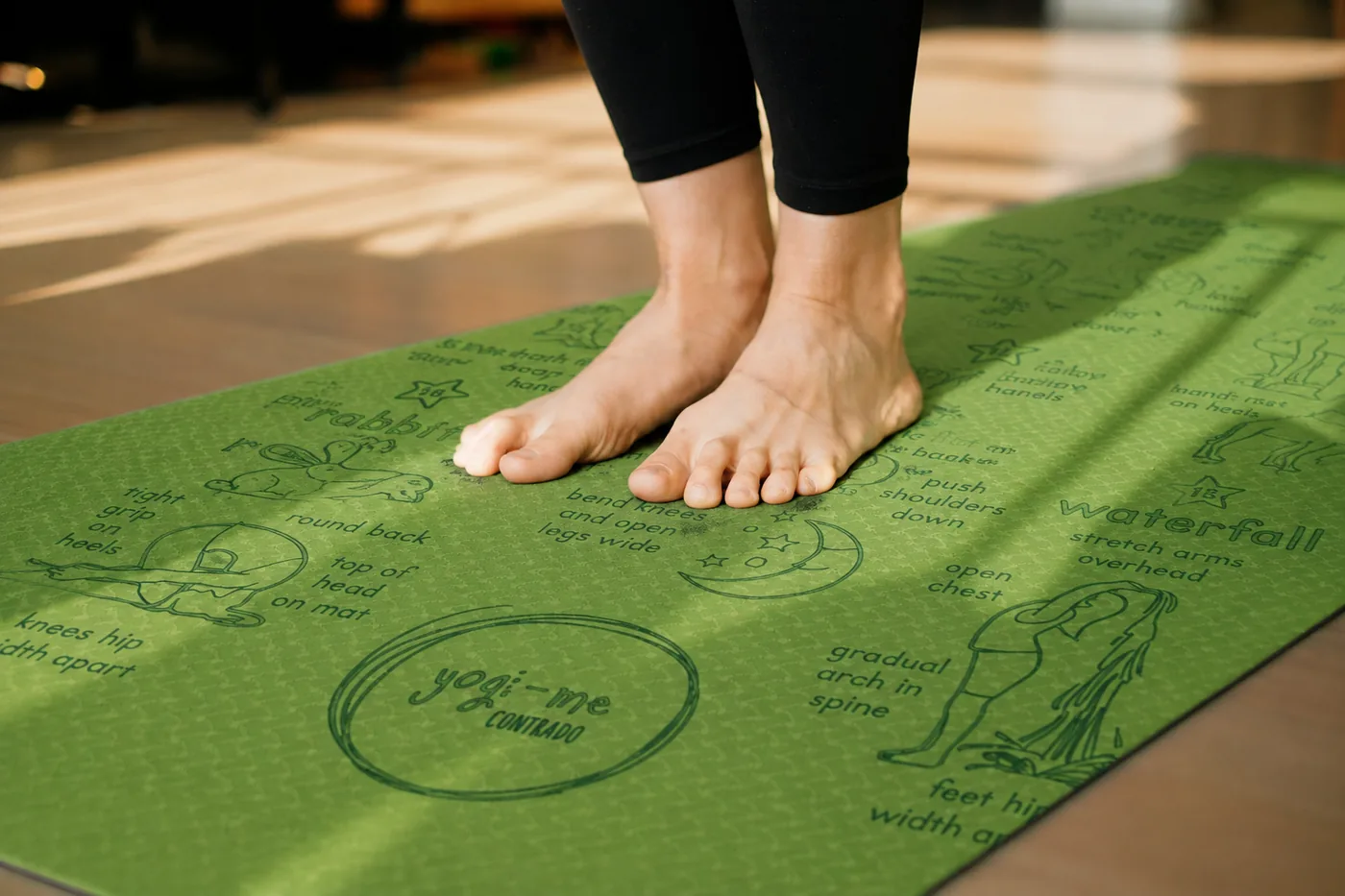
The easiest way to make screen-free time a habit is to make it easy to start. A kids' yoga mat with animal poses marked into it means your child can flop down and get going without you running the show. Have a look around our shop and find the mat your family will actually reach for.
Sources
- NHS - Physical activity guidelines for children (under 5 years)
- NHS - Physical activity guidelines for children and young people (5 to 18 years)
- NHS - Physical activity guidelines for children (under 5 years)
- NHS (Bedfordshire and Luton) - Screen time
- NHS - Toddler development and everyday skills
- NHS - How much sleep children need
- WHO - Guidelines on physical activity, sedentary behaviour and sleep for children under 5 years of age