practice
Sun Salutation for Kids, Step by Step

A simple, safe step-by-step sun salutation for kids you can do at home in under 5 minutes, with no kit and kid-friendly pose names.
Your child has energy to burn and you would rather it went somewhere other than a screen. A sun salutation is one of the easiest ways to give them a few minutes of proper movement.
It needs no kit, no space to speak of, and about five minutes. The whole family can do it together on the kitchen floor.
Here is the classic sequence broken into simple steps, with pose names your child will actually enjoy.
What is a sun salutation for kids?
A sun salutation for kids is a short, flowing set of yoga poses linked together with breathing. You move from standing tall, to reaching up, to folding down, to a gentle back bend and back again. For children we use playful names and slow, unforced movements so it feels like a game rather than exercise.
The magic ingredient is breath with movement. You breathe in as you reach up, and breathe out as you fold down. That pairing is what turns a set of stretches into yoga, and it helps children settle. If your child is brand new to this, our beginner's guide to yoga for kids is a gentle place to start.
How do you do a sun salutation with a child, step by step?
Go slowly and let your child copy you. One round takes about a minute. Move with the breath: breathe in as you open and lift, breathe out as you fold and lower. Never push into a stretch. Here is the full sequence in kid-friendly steps.
- Mountain. Stand tall and still, feet planted, arms by your sides. Breathe in slowly. "Be as tall as a mountain."
- Reach for the sun. Breathe in and sweep both arms up overhead. "Reach up and grab the sun."
- Rag doll fold. Breathe out and fold forward, letting your head and arms hang. Knees can bend. "Flop like a floppy rag doll."
- Halfway lift. Breathe in and lift your chest halfway, hands on your shins, back long and flat. "Look forward like a proud cat."
- Puppy plank. Breathe out and step or walk your hands forward into a plank, or rest on your knees. "Strong as a puppy."
- Cobra. Lower down, breathe in and lift your chest with a little roar. "Hiss and rise like a cobra."
- Downward dog. Breathe out, tuck your toes and lift your hips high into a big triangle. "Make a big mountain triangle and wag your tail."
- Step forward. Breathe in and walk your feet up to your hands, back into the fold.
- Rise like the sun. Breathe in, sweep your arms up and stand tall again. "Grow up like the rising sun."
- Mountain. Breathe out, bring your hands down and stand still. One round done.
To hold a young child's attention, make it a game. Count the breaths out loud, roar as the cobra, or pretend to be the sun rising over the hills. It works well as part of a longer morning yoga routine for kids too.
What age can children start sun salutations?
Children can start simple sun salutations from around age three, kept gentle and playful. Under-fives should be active for at least three hours a day spread throughout the day, so short pose sequences suit them well. From ages five to eighteen, children need around sixty minutes of activity a day, and a flow like this helps towards that.
The key is to keep it light. Young children are naturally flexible, so there is never any need to push them deeper into a stretch. Let their body do what it comfortably does and move on.
The NHS counts everyday active play, such as running, skipping and stretching, towards a child's daily activity, so a few slow rounds is a genuine contribution, not just play.
How many rounds should a child do?
Start with one to three slow rounds and stop there. Quality matters far more than quantity with children. A few calm, well-breathed rounds where they actually feel the movement beat a dozen rushed ones. Let them lead the pace, and finish while they are still enjoying it.
- New to yoga (3 to 5) - Rounds to try: 1 slow round; Focus on: Copying you, having fun
- Getting confident (5 to 8) - Rounds to try: 2 to 3 rounds; Focus on: Breathing in and out with each move
- Loving it and asking for more - Rounds to try: 3 to 5 rounds; Focus on: Smooth, steady flow
If they want to stop after one round, that is fine. If they want more, add a round at a time.
Is a sun salutation safe for kids?
Yes, a sun salutation is safe for most children when done gently. Never push or force a stretch, and stop straight away if anything hurts or feels uncomfortable. Practise on bare feet or a grippy, non-slip mat in a warm space with a bit of room. Comfy, loose clothes help, and an empty tummy is best.
A few simple safety habits go a long way. Clear the area of hard corners and toys before you start. Let your child skip any pose that feels awkward. If your child has a health condition or injury, have a quick word with your GP first.
A grippy surface really does help little hands and feet stay put in downward dog and plank. A non-slip kids' yoga mat gives them their own space and stops slips on wooden or tiled floors.
When is the best time to do sun salutations?
Two times work best: morning and bedtime. In the morning, a few brisk rounds wake the body up and offer a screen-free start to the day. At bedtime, slow, quiet rounds with long breaths help children wind down. Match the pace to the goal, lively for mornings, calm and slow for evenings.
A calming wind-down matters for sleep. The NHS suggests starting a winding-down routine about 30 minutes before bed and switching off devices such as tablets and phones beforehand, as the blue light from screens can keep a child's brain awake and make it harder to drop off. A short, slow sun salutation fits neatly into that screen-free wind-down.
Slowing the breath is the part that helps children settle. Anna Freud recommends relaxation techniques such as slow breathing, which children find helpful when they feel overwhelmed or anxious. Pairing each pose with a long, slow breath gives your child a simple tool they can use whenever they feel wound up.
It is worth doing. Children spend a good chunk of the day on screens, so an offscreen five minutes together is a small, welcome swap.
Frequently asked questions
Do we need any equipment?
No. Bare feet on a non-slip floor work fine to start. As your child gets keener, a grippy kids' mat gives them their own defined space and stops slips on hard floors, which makes plank and downward dog safer and comfier.
My child can't touch their toes, is that a problem?
Not at all. Bent knees in the forward fold are completely fine, and there is never any need to force flexibility. The point is the movement and the breathing, not how far they can reach. Their range will grow naturally over time.
How long does one sun salutation take?
About a minute per slow round. One to three rounds takes roughly two to five minutes, which is why it fits so easily into a morning or a bedtime routine without feeling like a chore.
Can toddlers join in?
Yes, with a relaxed approach. Toddlers will copy the fun bits, roaring like a cobra or wagging their tail in downward dog, and drift off when they have had enough. Let them dip in and out. Any playful movement counts towards their daily activity.
Will it help my child sleep or calm down?
It can help them settle. The breathing and relaxation are what do the work: the NHS backs a calm wind-down routine before bed, and Anna Freud backs slow breathing to help children relax. It is a helpful part of a routine, not a cure for sleep problems.
Give your child their own space to flow
A sun salutation costs nothing and takes five minutes, and it is one of the simplest offscreen habits you can start today. Do a round together tomorrow morning and see how they take to it.
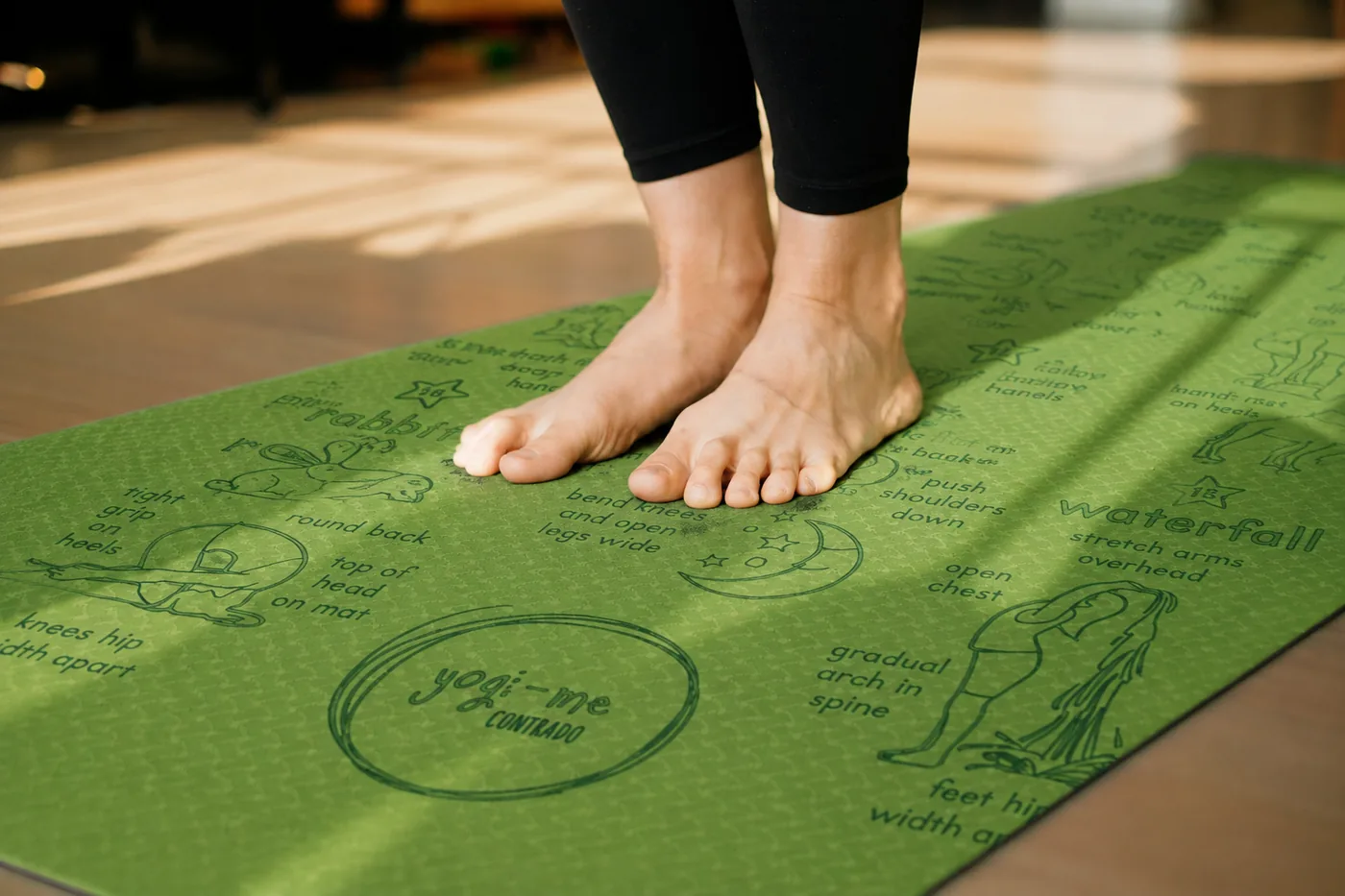
When they are ready for their own spot to practise, our kids' yoga mats have 15 numbered poses marked into the mat, so your child always knows what comes next. Grippy, non-toxic and made for little feet.
Sources
- NHS - Physical activity guidelines for children and young people
- NHS - Physical activity guidelines for children (under 5 years)
- World Health Organization - Guidelines on physical activity, sedentary behaviour and sleep for children under 5 years of age
- Anna Freud - Relaxation techniques
- NHS - Healthy sleep tips for children