practice
Yoga for Toddlers: Simple Poses for 2 to 4 Year-Olds

Playful, screen-free yoga for 2 to 4 year-olds. Simple animal poses, real benefits and how to keep it fun, short and low-pressure at home.
It's raining, your two-year-old has spare energy to burn, and you'd rather not hand over a screen to buy ten minutes' peace. Sound familiar?
Yoga for toddlers is one of the easiest ways to turn that restless energy into something calmer, together. No class, no kit, no experience needed.
Just so we're clear from the start: with this age group, it's play, not proper stretching. You're pretending to be animals on the living room floor, and that's exactly the point.
Is yoga safe for a 2 year old?
Yes, toddler yoga is safe when you treat it as playful movement rather than adult stretching. You never hold poses or push a stretch. You let your child copy animal shapes at their own pace, keep sessions to five or ten minutes, and stop the moment they lose interest or seem uncomfortable.
At this age your child's balance and coordination are still developing, so wobbling, flopping and wandering off are all completely normal. The UK Chief Medical Officers' early years physical activity guidance explains that active play helps young children develop movement and co-ordination, so a shaky tree pose is a sign your toddler is building those skills, not doing it wrong.
Never force a limb into position. If your child has any developmental or physical concerns, have a quick word with your GP or health visitor before you start. Beyond that, a rug or carpet is all the safety gear a toddler needs.
What are the benefits of toddler yoga?
Toddler yoga helps your child hit their daily movement target, burns off spare energy, and supports better sleep. It builds balance, coordination and body awareness through play. It also gives you a gentle, screen-free way to help a toddler settle when big feelings, tantrums or wound-up moments take over.
The movement side matters more than you might think. The NHS says toddlers and pre-schoolers aged 1 to 5 need at least 180 minutes (3 hours) of physical activity a day, spread throughout the day. A few minutes of animal poses is a lovely way to chip into that total when you're stuck indoors.
The UK Chief Medical Officers' early years guidelines note that active young children tend to be healthier, happier, more school-ready and better sleepers. Bedtime yoga can also tie into a calming wind-down, which suits the 10 to 12 hours of night-time sleep The Sleep Charity says young children need.
If you're new to all this, our beginner's guide to yoga for kids walks through the basics without any jargon.
Is toddler yoga a good screen-free alternative?
Yes, toddler yoga is a genuinely good screen-free alternative because it's free, indoors and takes only a few minutes. Health bodies actively encourage swapping sedentary screen time for active family play, and yoga fits that perfectly. It gives you connection and movement in one, with nothing to plug in.
The advice is fairly consistent here. The World Health Organization recommends no more than one hour of screen time a day for 2 to 4 year-olds (less is better), alongside at least 180 minutes of varied activity.
The NHS advises building screen use around positive family activities like exercise and sleep, warning that too much screen time can crowd out those things. Shared toddler yoga is exactly the sort of active family time it means.
If cutting back on screens feels like a battle, you might find our post on screen-free habits that stick helpful too.
What are the best yoga poses for toddlers?
The best toddler yoga poses are simple animal and nature shapes with a story attached. Toddlers respond to imaginative play and animal sounds far more than verbal instructions, so you roar, hiss and flap rather than explain. Butterfly, cat, cow, tree, dog, snake, lion's breath and star all work beautifully.
Here's a quick starter set to try. Make each one a game, and follow your child's lead.
- Butterfly - How to play it: Sit, soles of feet together, flap knees; What to say: "Flutter your wings"
- Cat and cow - How to play it: On hands and knees, arch and dip the back; What to say: "Meow" then "moo"
- Tree - How to play it: Stand tall, one foot resting on the other ankle; What to say: "Grow like a big tree"
- Dog - How to play it: Hands and feet down, bottom up high; What to say: "Woof, stretch like a puppy"
- Snake - How to play it: Lie on tummy, lift chest, arms down; What to say: "Hiss like a snake"
- Lion's breath - How to play it: Kneel, open mouth wide, stick tongue out, breathe out; What to say: "Big lion roar"
- Star - How to play it: Stand with arms and legs wide; What to say: "Twinkle like a star"
These make a natural little sequence, from wiggly and energetic to calm. For step-by-step versions with pictures, see our roundup of easy yoga poses for kids.
How often should toddlers do yoga?
Keep toddler yoga to short, frequent bursts of around five to ten minutes rather than one long session. Little and often suits a short attention span far better. Bedtime wind-downs and rainy-day play are ideal moments. There's no set number of times a week, so do it whenever it feels fun and useful.
Don't aim for a polished routine. If your toddler does two poses then dashes off to play with bricks, that still counts. The goal is enjoyable movement and a bit of together time, not a class.
You don't need special equipment for this age, though a soft, non-slip surface helps little feet stay steady. If you use a mat, look for a thin, non-slip one made from non-toxic, phthalate-free materials that's kind to small hands and knees.
Frequently asked questions
Can a 3 year old really do yoga?
Yes, and 3 is often a lovely age to start. By now many children enjoy copying shapes and making animal noises. Keep it playful and expect plenty of wandering. Yoga for 3 year olds is about joining in, not getting poses "right".
What if my toddler won't follow along?
That's completely normal and nothing to worry about. Toddlers learn by watching, so simply do the poses yourself and narrate the story. Many will drift in and out. Following their lead, rather than insisting, keeps the whole thing fun and low-pressure.
Do I need a yoga mat for a toddler?
No, a rug or carpet is fine for this age. A thin, non-slip mat can make balancing poses a little easier and gives your child their own space. If you buy one, choose non-toxic, phthalate-free materials suited to small children.
Can yoga help with toddler tantrums?
It can be a helpful tool. Calming poses and slow "lion's breath" give your child a gentle way to release big feelings and reset. It won't stop every meltdown, but a few quiet minutes of movement can take the heat out of a wound-up moment.
Ready to make yoga part of playtime?
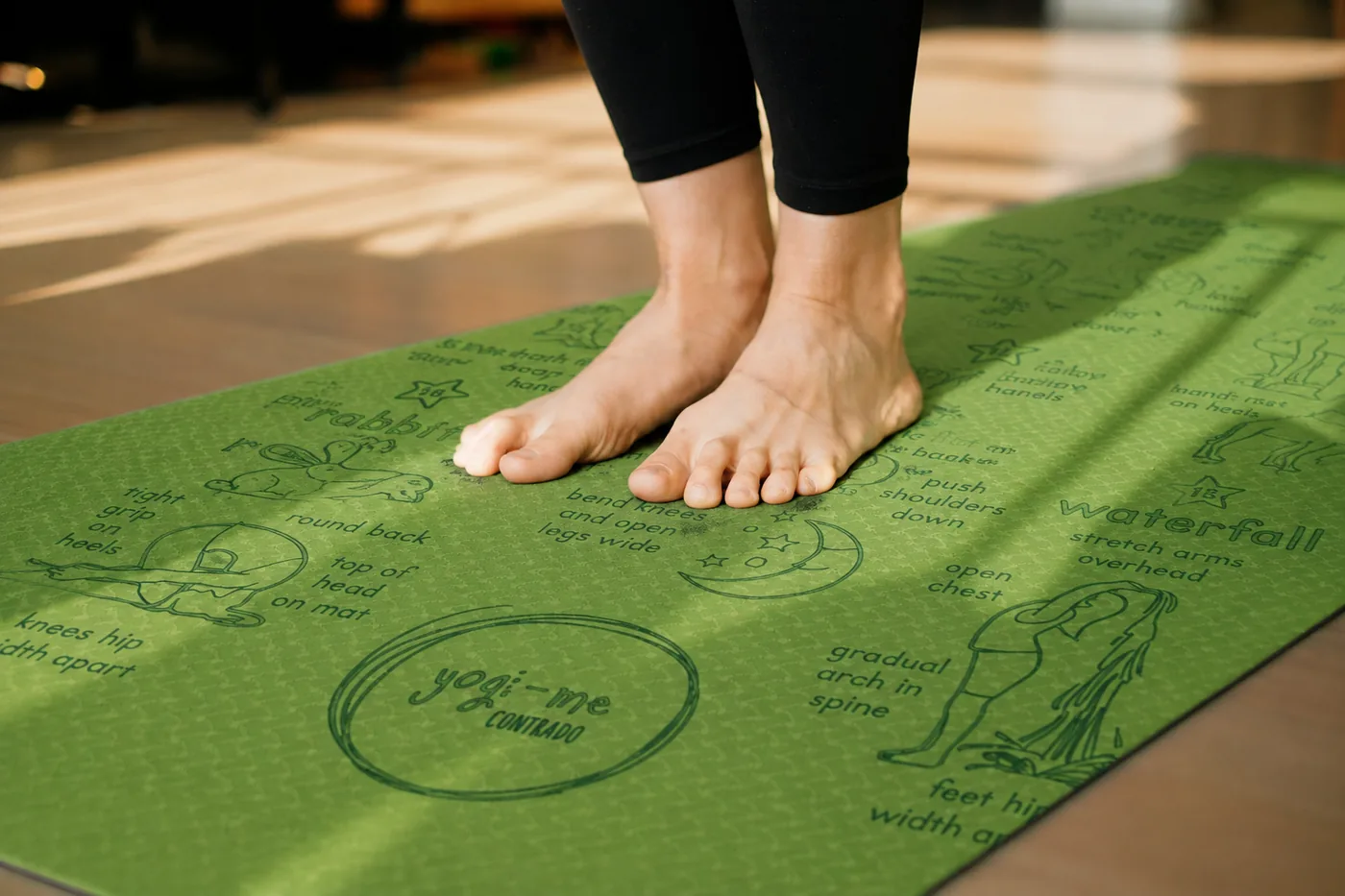
Toddler yoga is meant to be short, silly and imperfect, so start with one animal pose today and see where the giggles take you. When you're ready to give your little one their own soft, non-slip space to roar and flutter on, our screen-free kids' yoga mats feature 15 numbered poses marked into the mat, so the next adventure is always ready to roll out.